

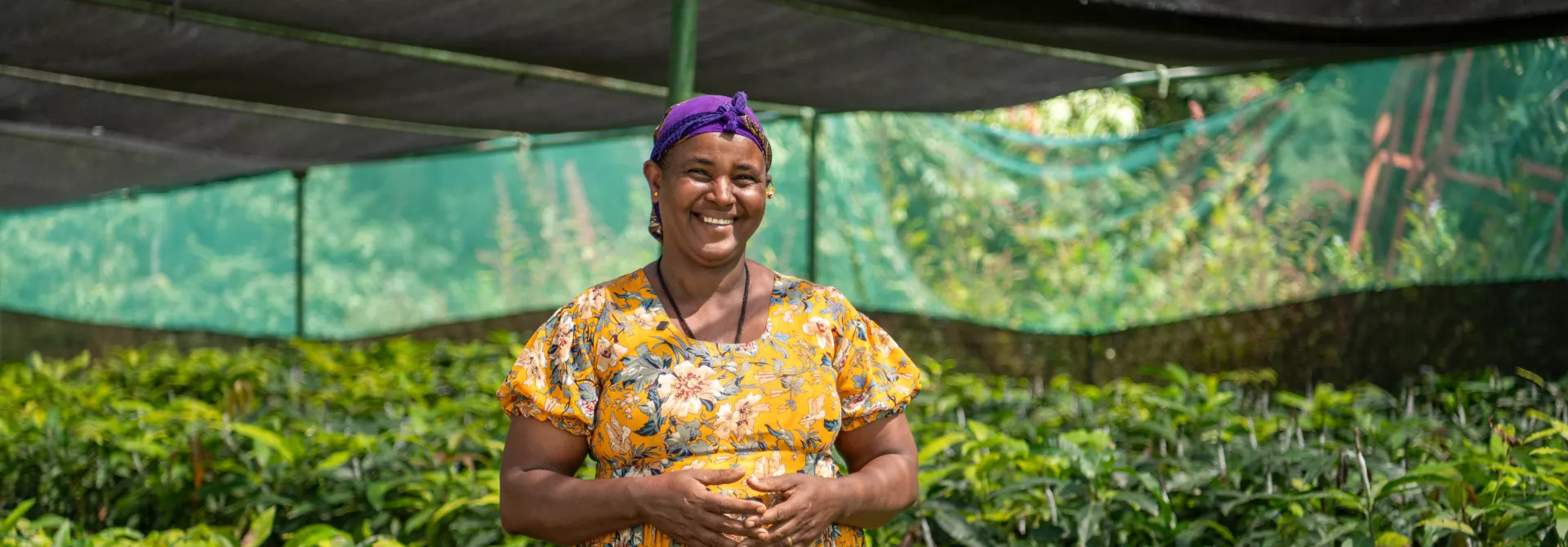
Power for Food Partnership in Ethiopia
Ethiopia is advancing food systems transformation through the regenerative agriculture and renewable energy nexus
Ethiopia's rural economy is under growing pressure. Over 95% of farms depend on increasingly erratic rainfall, soil degradation is reducing yields by 1-2% every year, and productive uses of renewable energy remain limited to a fraction of their potential. Post-harvest losses of up to 40% further undermine the livelihoods of smallholder farmers who produce the vast majority of the country's food.
Yet Ethiopia is also at an important moment of opportunity. A new wave of national policies, including the 2024 Rural and Agricultural Development Policy and the Climate Resilient Green Economy Strategy, is creating space for integrated, regenerative, and energy-smart approaches. Government institutions are playing an active role in shaping and guiding this transition. Similarly, development partners, research institutions, private sector and market actors, and civil society organisations are increasingly aligning around shared priorities. While the foundations are taking shape, building on this opportunity will require stronger coordination, sustained evidence generation, and targeted investment.
The Power for Food Partnership in Ethiopia works at this nexus. Building on years of in-country experience and a strong network of partners, we are generating evidence, strengthening market systems, and creating the conditions for farmers and agribusinesses to put regenerative agriculture and productive renewable energy into practice together.
A collaborative force for food systems transformation
The Power for Food Partnership in Ethiopia brings together a diverse coalition working towards a shared goal: driving the transition to food systems that are regenerative, renewable, and resilient. Government ministries are engaged as strategic partners through formal agreements, ensuring that the Partnership's work is aligned with national priorities and policies. Alongside them, a diverse set of implementing and technical partners, including research institutions, private sector actors, industry associations, and civil society organisations, each contribute unique expertise and networks to a movement that no single organisation could build alone.
Working across Central Ethiopia, Sidama, and South Ethiopia, the Partnership focuses on regions with strong agricultural production bases, existing market linkages, and energy access gaps where decentralised renewable solutions can make an immediate difference. This geographic focus enables partners to build critical mass, share learning, and deliver services that tackle agricultural and energy challenges together.
Through the Learn, Link, and Leverage pathways, partners establish demonstration sites, strengthen the capacity of small and medium enterprises, develop tailored financial products, and advocate for policy frameworks that recognise regenerative agriculture and renewable energy as complementary and interdependent priorities. The goal is to close the gap between national policy ambitions and ground-level delivery: building a locally owned movement toward resilient, inclusive, and regenerative food systems.
Partners in Ethiopia












We joined the Power for Food Partnership to promote nexus approaches that combine regenerative agriculture and renewable energy, recognising that sustainable food systems transformation requires coordinated, multi-stakeholder action. Through this collaboration, we aim to strengthen synergies, enhance joint learning, and scale these approaches for inclusive, climate-resilient, and sustainable livelihood transformation.
Dr. Fentahun Mengistu, Ethiopia Country Director, Sasakawa Africa Association
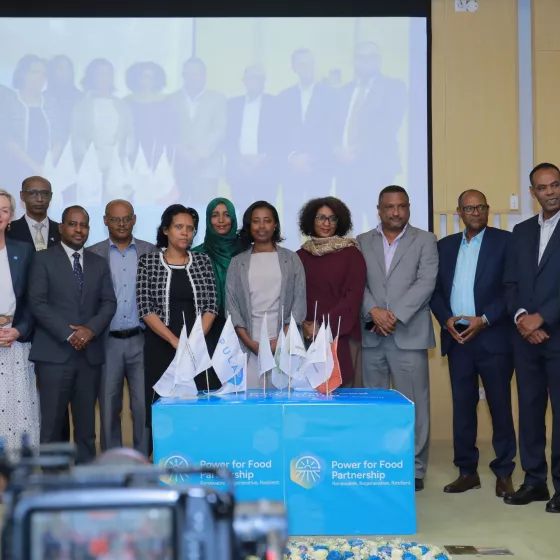
Join the movement
Are you working at the nexus of regenerative agriculture and renewable energy in Ethiopia?
Whether you are a farmer, investor, researcher, entrepreneur, civil society organisation, or policymaker, we are always looking to connect with people who share our vision. Get in touch and find out how we can work together.