

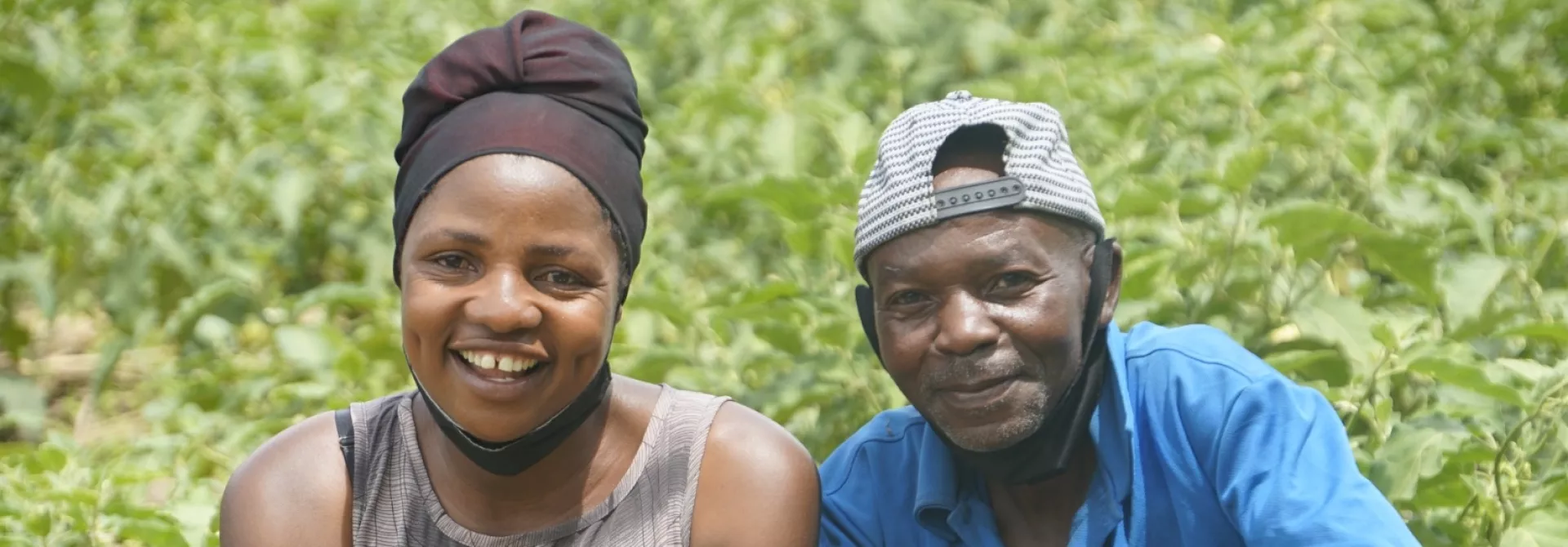
Power for Food Partnership in Rwanda
Rwanda is turning strong policy commitment into practical change for smallholder farmers
Rwanda's smallholder farmers face mounting pressure from climate variability, declining soil fertility, and limited access to productive energy. With only 6% of agricultural land irrigated and over 40% of food production lost post-harvest, amounting to an estimated 12% loss to GDP, the stakes for food systems change are high. Agriculture accounts for 33% of GDP and employs over 70% of the population, yet the sector remains dominated by smallholder farmers working fragmented, rainfed plots with limited access to irrigation, mechanisation, or reliable markets.
Rwanda has made remarkable progress on electrification and has strong political commitment to inclusive green growth. National strategies including Vision 2050, the National Strategy for Transformation, and the Green Growth and Climate Resilience Strategy all signal a clear direction toward climate-smart, regenerative, and energy-powered rural economies. The ambition is there. What the country now needs is the coordination, evidence, and investment to close the gap between policy and delivery, especially at the district level.
The Power for Food Partnership in Rwanda works at this nexus. Building on years of in-country experience, we are generating evidence, strengthening market linkages, and creating the conditions for farmers and agribusinesses to put regenerative agriculture and productive renewable energy into practice together.
Bridging policy and practice with collective action
The Power for Food Partnership in Rwanda brings together government ministries, research institutions, civil society organisations, and private sector actors. Each partner contributes unique expertise and networks toward a shared goal: driving the transition to food systems that are regenerative, renewable, and resilient.
The eastern districts of Bugesera, Rwamagana, Kayonza, and Nyagatare face a long dry season and significant dependence on irrigation, making them among the most urgent contexts for integrated RA-PURE solutions in the country. The western districts of Rubavu and Rutsiro bring complementary ecological conditions and value chains, broadening the partnership's reach and the evidence base it can generate across Rwanda's diverse farming landscapes.
Through the Learn, Link, and Leverage pathways, partners establish demonstration sites, strengthen the capacity of small and medium enterprises, develop tailored financial products, and advocate for policy frameworks that treat regenerative agriculture and renewable energy as interconnected priorities. A key focus in Rwanda is bridging the gap between national ministries, where agriculture, energy, and environment often operate in silos, and district-level actors who are ready to act but need the tools, financing, and coordinated support to do so. The goal is to embed RA-PURE approaches into Rwanda's national and district planning systems, so that smallholder farmers and agribusinesses have the tools, markets, and support they need to build more resilient and regenerative livelihoods.
Partners in Rwanda




The Power for Food Partnership exemplifies the value of collaborative, multi-actor approaches to addressing complex challenges in Rwanda’s agri-food systems. By integrating regenerative agriculture with renewable energy, we create pathways for improved soil health, enhanced climate resilience, and strengthened livelihoods.
Marie Chantal Rwakazina, Managing Director, High Lands Centre of Leadership for Development
Join the movement
Are you working at the nexus of regenerative agriculture and renewable energy in Rwanda?
Whether you are a farmer, investor, researcher, entrepreneur, civil society organisation, or policymaker, we are always looking to connect with people who share our vision. Get in touch and find out how we can work together.